

From Observing to Co-Creating: Adolescents Reimagining Inclusive, Period-Friendly Public Toilets
Over the past three months, AAINA, in partnership with WRI India, empowered adolescents—including those with visual, cognitive, and physical disabilities—to shape the future of inclusive public infrastructure. Rather than designing for adolescents, the initiative placed them at the heart of the process as auditors, designers, and advocates for change.
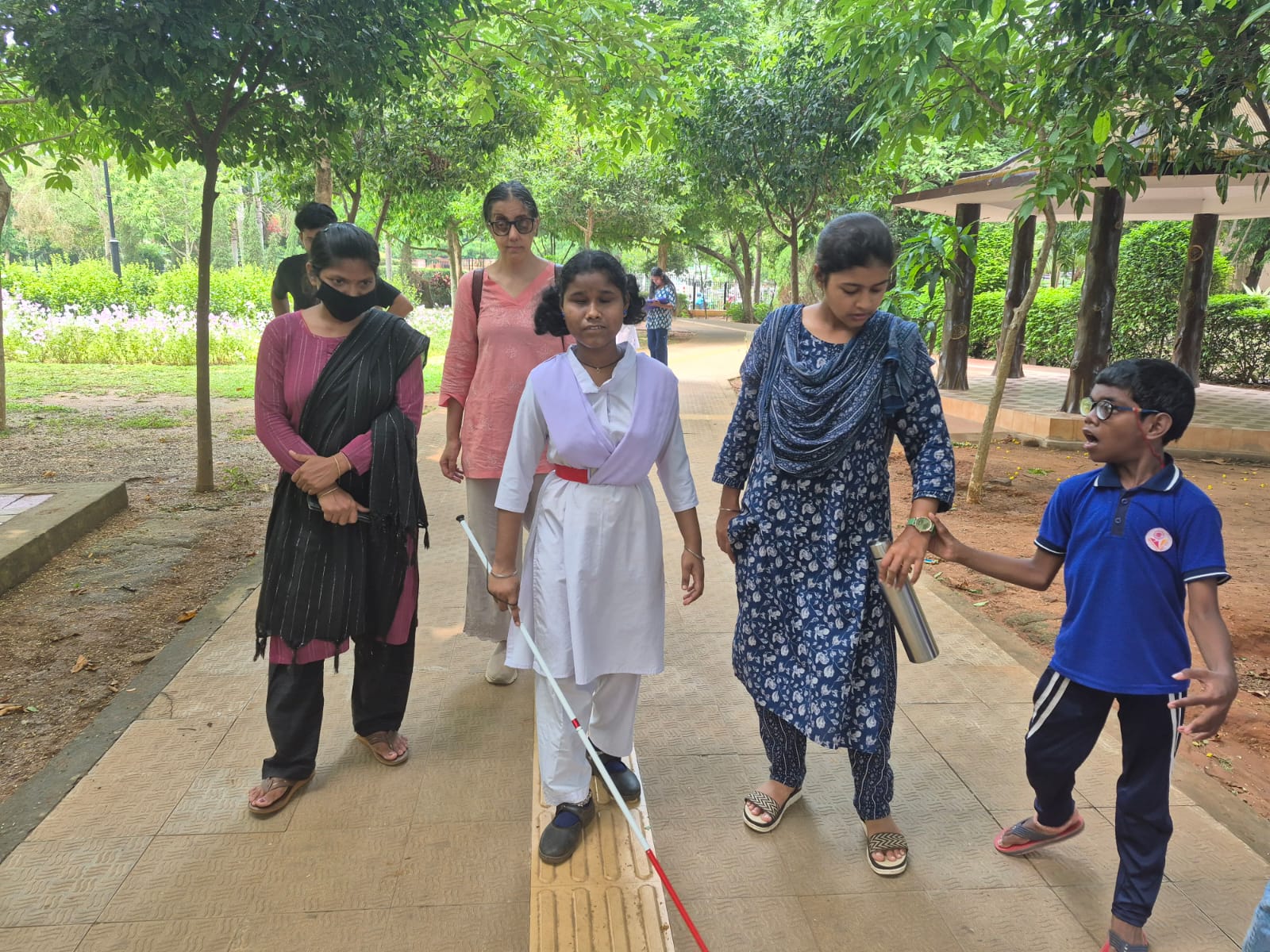
The journey began with field testing of the Inclusive Public Space Assessment Framework (PSAF) at IG Park, where adolescents assessed public spaces using accessible Braille and pictorial tools. By evaluating pathways, signage, toilets, and other public amenities through their own lived experiences, they identified barriers that often go unnoticed while gaining a deeper understanding of what makes public spaces truly inclusive.
The insights from these assessments informed a vibrant co-design workshop, where participants collaboratively envisioned an accessible, period-friendly public toilet. Drawing from their experiences, they proposed practical and innovative features such as tactile pathways, Braille and audio signage, accessible menstrual product vending machines, emergency alarms, improved hygiene facilities, and universally accessible layouts.
More than a design exercise, the initiative demonstrated the power of meaningful participation. Adolescents evolved from identifying challenges to creating solutions, reinforcing that inclusive cities are best designed with the people who use them. Their ideas are now guiding the development of demonstration models that will help make public toilets safer, more accessible, and period-friendly for everyone.